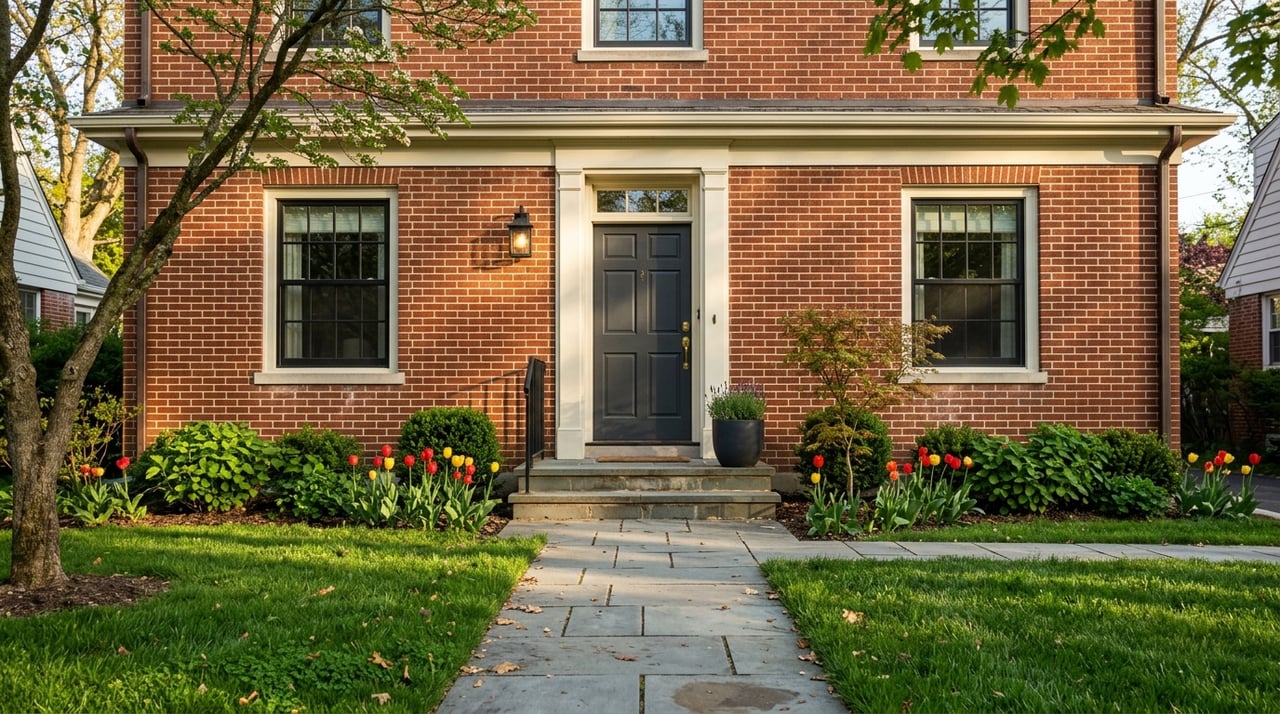
Arlington vs. DC: Which Fits Your Lifestyle And Commute?
Trying to decide between Arlington and Washington, DC can feel harder than it should. They are close together, both offer strong transit access, and both can support a connected urban lifestyle, but the day-to-day experience is not the same. If you are weighing commute, housing style, and how you actually want to live, this guide will help you compare the tradeoffs with more clarity. Let’s dive in.
Arlington is a 26-square-mile county just across the Potomac, with 127,090 housing units. Its housing stock leans heavily toward apartments and condos, with 72.7% of units in multi-family buildings.
Washington, DC is larger and more varied. The Census Bureau estimated 702,250 residents in 2024, and the city’s 2019-2023 ACS profile shows 356,101 housing units. In practical terms, that means DC gives you a broader range of neighborhood settings, while Arlington tends to feel more concentrated around key corridors.
If you picture yourself in a condo, apartment, or a home near Metro, Arlington may feel like a natural fit. Arlington’s 2026 profile shows 21.7% detached homes, 5.6% attached homes, and 72.7% multi-family units.
That trend is still becoming more pronounced. Since 2020, 99% of Arlington’s net housing growth has come from multi-family apartments and condos, which tells you the county is continuing to add homes in that format rather than expanding single-family supply in a major way.
DC’s housing mix depends more on where you look. A 2025 Office of Planning report says 37% of District households live in single-family units, and 12% live in detached homes.
That does not mean every part of DC feels suburban. Some areas have dense apartment buildings and townhouses near retail and dining, while others include quieter residential streets, parks, and a mix of single-family homes and apartments. If you want more choice in housing form, DC generally gives you more room to compare options.
Arlington reports a 2025 average apartment rent of $2,546. It also reports average assessed values of about $1.279 million for detached homes, $996,152 for attached homes or townhouses, and $476,740 for condos.
Those figures suggest that Arlington, especially in detached-home segments, can feel expensive. Arlington’s 2024 median household income is also higher at $142,114, which supports the idea that many buyers and renters there are shopping in a higher-cost environment.
DC’s 2019-2023 ACS profile shows a median gross rent of $1,900 and a median owner-occupied value of $724,600. Its median household income is $106,287.
It is important to treat this as a directional comparison, not a perfect one. Arlington is reporting average apartment rent and assessed values, while DC is reporting median gross rent and median owner-occupied value. Still, the bigger picture is useful: DC often gives you more neighborhood-to-neighborhood variation in both price and housing type.
Arlington is deeply shaped by its transit corridors. The county has 11 Metrorail stations, 14 ART bus routes, and 123,500 average weekday Metro entries and exits in 2025.
Its planning model is built around Metro station areas, mixed-use corridors, and walkable, bike-friendly transit villages. In the Rosslyn-Ballston corridor, Arlington reports a 40% public-transit-to-work share and a 6% walk-to-work share, which shows how strongly some parts of the county are organized around transit access.
DC’s 2019-2023 ACS profile shows 29.4% of workers age 16 and over working from home, 28.2% driving alone, 22.3% using public transportation, and 10.0% walking. The mean travel time to work is 30.3 minutes.
Compared with Arlington, DC has a lower drive-alone share and a higher public transit and walking share. DDOT also describes daily travel in the District as a mix of pedestrian, bus, bike or scooter, rail, and car use, which fits the city’s more urban, multi-choice transportation pattern.
If you work from home often, both places can make sense, but Arlington stands out here. Arlington reports that 35% of residents age 16 and over work from home, compared with 29.4% in DC.
That may appeal to buyers who want strong transit access without needing to use it every day. If your ideal setup is a home base with occasional trips into an office or around the region, Arlington’s mix of convenience and flexibility can be attractive.
Arlington’s growth is focused along three primary transportation corridors and seven mixed-use Metro transit villages. Those areas contain 36 million square feet of office space, 6 million square feet of retail, and more than 47,000 residential units.
That creates a lifestyle that often feels efficient and predictable. If you like the idea of living near shops, restaurants, trails, and transit in a clearly defined corridor, Arlington delivers that in a very intentional way.
Arlington also reports 167 parks, 956 acres of parkland, 8 libraries, 52 miles of off-street trails, and 35.2% tree coverage in 2023. For many buyers, that adds up to a polished blend of urban convenience and outdoor access.
DC is less uniform, and for some buyers that is the main draw. One area may center on apartment buildings, townhouses, retail, and restaurants, while another may offer more park access, lower-density streets, and a different housing mix.
That variety can be a real advantage if you do not want a one-size-fits-all experience. In DC, your lifestyle depends more on the specific neighborhood you choose, which creates both more opportunity and more need for careful comparison.
Rather than asking which is better, it helps to ask which is better for you. The right answer often comes down to your weekly rhythm, housing goals, and what kind of environment feels easiest to live in over time.
A buyer focused on Metro access, a condo purchase, and an efficient corridor lifestyle may lean toward Arlington. A buyer who wants more neighborhood variety, more walking and transit options, or a wider mix of housing types may feel more at home in DC.
From an investor-minded perspective, this is also where block-by-block guidance matters. Two homes at similar price points can offer very different lifestyle tradeoffs, resale positioning, and long-term fit depending on whether you prioritize commute, housing form, or neighborhood setting.
If you are comparing Arlington and DC, the best next step is to look at your budget, your likely commute pattern, and the type of home you want first. From there, it becomes much easier to narrow the search and focus on the places that match how you actually want to live.
If you want help comparing Arlington and DC with a local, strategic lens, connect with James Podoley for tailored guidance across the DMV.


Bringing together a team with the passion, dedication, and resources to help our clients reach their buying and selling goals. With you every step of the way. Contact us today to find out how we can be of assistance to you!